
What Is Cupping?

How this recovery technique can help dancers and artistic athletes move and feel better.
Many dancers and athletes have seen the circular marks left behind from cupping therapy, but fewer people understand what cupping actually does or why it’s used in recovery and performance care.
At Performance Pilates and Rehab, we use cupping with some of our clients as part of the recovery process to help address tightness, mobility restrictions, and muscle overuse that can develop with intense training schedules.
While cupping is not a “quick fix,” it can be a useful tool when combined with strength, mobility work, and proper movement training.
What Is Cupping?
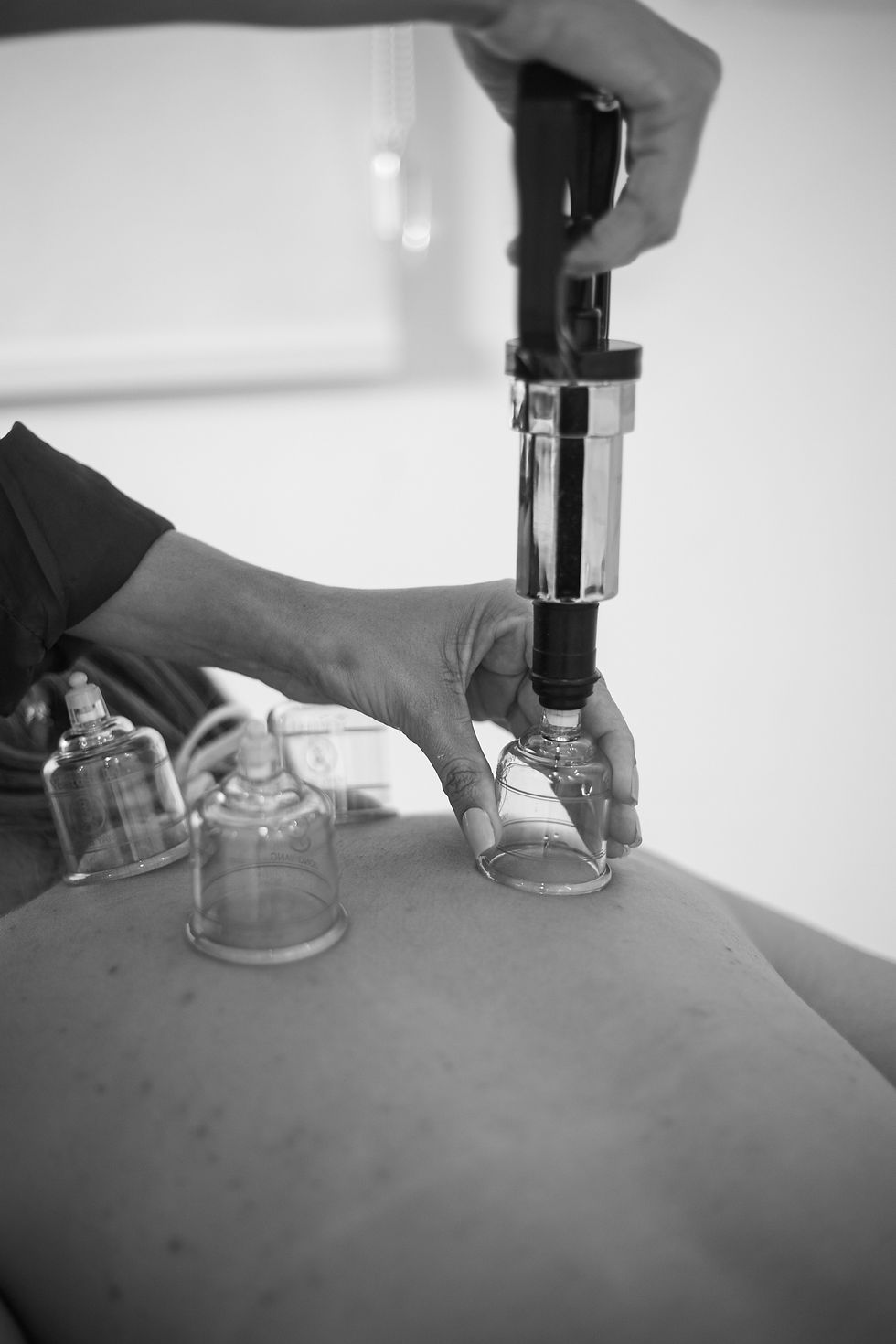
Cupping is a soft tissue treatment technique that uses suction to gently lift the skin and underlying tissue. Unlike massage, which applies pressure downward into the tissue, cupping creates decompression by pulling tissue upward. This can help improve movement and circulation in areas that feel restricted or overworked.
Cupping is commonly used on areas such as:
Calves
Hamstrings
Hip flexors
Shoulders
Back muscles
These are all areas that dancers and artistic athletes often overload through repetitive movement and training.

Why Dancers Often Feel Tight
Many dancers assume tightness always means they need more stretching, but that is not always the case.
Sometimes muscles become tight because they are:
Overworked
Fatigued
Guarding for stability
Compensating for weakness elsewhere
This is especially common in dancers who train at high intensity or work in extreme ranges of motion regularly. When tissues stay overloaded for long periods, movement can start to feel restricted, stiff, or uncomfortable.
How Cupping May Help Recovery
Cupping can help by reducing some of the tension and restriction that builds up in overused tissues.
Clients often report:
Feeling looser after treatment
Improved movement quality
Reduced muscular tightness
Easier mobility in certain positions
The decompression created by the cups may also help improve circulation and allow tissues to move more freely relative to one another. For dancers, this can be especially helpful in areas that constantly experience repetitive loading, such as the calves, hips, feet, and back.
Cupping Is Not Just About Relaxation
While cupping can feel relieving, our goal is not simply temporary relaxation. At Performance Pilates and Rehab, we use cupping as part of a larger treatment approach that focuses on:
Recovery support
Improving movement quality
Reducing excessive tissue tension
Helping the body tolerate training demands more effectively
In many cases, reducing tightness is only one part of the process. We also look at why the body became overloaded in the first place.
Recovery Supports Performance
Recovery is often overlooked in dance training, but it plays a major role in helping the body adapt to workload. When tissues stay excessively tight or fatigued, movement quality can change. Dancers may start compensating, gripping, or struggling to access positions that normally feel comfortable.
Supporting recovery can help dancers:
Move more efficiently
Maintain consistency in training
Feel less restricted during technique
Recover more effectively between rehearsals and performances
This is especially important during periods of high training volume.

Every Dancer Is Different
Not every client needs cupping, and it is not the right tool for every situation. That’s why we individualize treatment based on the dancer’s needs, goals, and movement patterns.
For some clients, cupping may be used to assist recovery after heavy training periods. For others, it may help address specific areas of tension that are limiting movement quality. The goal is always to help the body feel more supported, not simply to chase temporary relief.
The Bigger Picture
Cupping is one of many tools that can support dancers and artistic athletes throughout training and recovery.
At Performance Pilates and Rehab, our focus is helping clients move better, recover more effectively, and build bodies that can sustain the demands of dance long-term.
Because recovery is not separate from performance — it’s part of what allows performance to happen consistently.


Comments